Little Smiles. Big Questions.
Your child notices their teeth look different from someone else's. Or your teenager asks for whitening strips after seeing a bright smile on social media. Before reaching for a whitening product, here's what parents should understand.
Why age alone doesn't tell the whole story.
Teeth change throughout childhood. A seven-year-old, a twelve-year-old, and a sixteen-year-old can have very different dental development. Their options shouldn't be determined by a birthday alone.
Baby and mixed dentition
Children may have primary teeth, permanent teeth, or both. Those teeth naturally differ in color and appearance. Full-arch cosmetic bleaching is discouraged during these developmental stages.
Permanent teeth and individual needs
Some adolescents may have situations where a dentist considers whitening appropriate. That decision depends on the cause of discoloration, oral health, development, and the proposed treatment.
Important: There is no universal rule that whitening becomes safe at fourteen, sixteen, or another specific birthday. A pediatric dental evaluation is the appropriate starting point.
Why do children's teeth sometimes look yellow?
A child's tooth color isn't automatically a sign that something is wrong. Understanding the difference between natural appearance and actual discoloration matters before considering any cosmetic procedure.
Permanent teeth can appear yellower
Permanent teeth often appear more yellow than baby teeth. Differences in enamel, dentin, and light reflection can make the contrast noticeable during the years when both types of teeth are present.
Not every color change is cosmetic
Surface stains, developmental enamel differences, medications, dental injury, or tooth decay can change tooth appearance. A dentist can help determine the reason and whether any action is needed.
When one tooth looks different: A tooth that becomes unusually gray, dark, or discolored after an injury should be examined by a dentist. Do not attempt to conceal the change with whitening.
Every growing smile deserves to feel like its own.
Children and teenagers can feel pressure to have perfectly uniform, bright-white teeth. But natural tooth color varies, and healthy teeth don't have to look like filtered social-media photographs.
If discoloration affects your child's confidence, listen to their concerns without assuming whitening is the right solution. A pediatric dentist can discuss the options and their limitations.
What's the right next step?
Select the situation closest to your question. Each panel explains a sensible starting point—not a diagnosis or clearance for whitening.
My younger child wants whiter teeth.
Start with oral care, not bleaching.
Encourage consistent brushing with age-appropriate fluoride toothpaste, daily flossing where teeth touch, and routine dental visits. Ask a pediatric dentist about any visible stains or concerns. Avoid cosmetic bleaching of baby or mixed dentition.
My teenager wants whitening strips.
Have a dentist assess suitability first.
Whitening strips can contain peroxide and may cause sensitivity or gum irritation. A dentist should assess the reason for discoloration, dental development, and oral health before a teenager uses bleaching products. If an at-home method is recommended, follow the dentist's guidance and ensure appropriate adult supervision.
One tooth is darker than the others.
Schedule a dental evaluation.
A single darkened tooth may have a different cause from ordinary surface staining, particularly after an injury. A dentist should evaluate the tooth before any cosmetic treatment is considered.
My child has stains but no discomfort.
Identify the type of stain.
Some stains are external and may be addressed during a professional dental cleaning. Other color differences originate within the tooth or during development. Ask the dentist to identify the cause before choosing a whitening approach.
My teenager has braces or dental work.
Discuss timing with the dental team.
Brackets and other appliances can affect access to tooth surfaces and create uneven cosmetic outcomes. Restorations also do not bleach like natural teeth. Ask the treating dentist or orthodontist about appropriate timing and options.
This guide is educational and does not determine medical eligibility or recommend a particular whitening product.
Are natural or organic whiteners safer for kids?
Not necessarily. The words "natural," "organic," and "plant-based" don't prove that a product is safe for children or appropriate for developing teeth.
Understand the actual formulation
Products described as gentle may still contain ingredients capable of irritating oral tissues. Age suitability depends on the complete formulation, concentration, exposure, and clinical circumstances.
Whitening isn't risk-free
Bleaching products can cause temporary tooth sensitivity and gum irritation. These potential effects are especially important when considering cosmetic procedures for younger people.
Skip DIY whitening experiments. Lemon juice, charcoal scrubs, abrasive household mixtures, and unverified internet remedies are not good substitutes for a dentist's advice. Acids and abrasives can damage tooth surfaces.
Three habits worth teaching early.
For most children, consistent oral hygiene and regular dental care matter far more than cosmetic shade changes.
Brush consistently
Brush twice daily using age-appropriate fluoride toothpaste and appropriate adult help or supervision.
Clean between teeth
Floss daily where adjacent teeth touch, with help when needed.
Visit the dentist
Keep routine pediatric dental appointments. Ask about persistent discoloration or changes in tooth appearance.
Clear answers, without the guesswork.
What age can children start whitening their teeth?
There is no universal safe starting age. Dentists consider dental development, discoloration, oral health, and risks. Full-arch cosmetic bleaching is discouraged for children with baby or mixed dentition.
Is whitening safe for a 14-year-old?
Being fourteen doesn't automatically establish suitability. A dentist should assess the teenager individually before any bleaching treatment is considered.
Why are my child's permanent teeth yellow?
Permanent teeth often look more yellow than baby teeth due to normal differences in tooth structure. However, persistent or unusual discoloration should be assessed.
Can kids use whitening strips?
Do not assume over-the-counter whitening strips are appropriate for a child or teenager. Product age restrictions, dental development, and potential side effects must be considered. Ask a pediatric dentist first.
Is peroxide-free whitening automatically safer?
No. Safety cannot be determined solely by whether a formulation contains peroxide. Other ingredients, concentrations, and methods may carry risks.
Can a dental cleaning make teeth look whiter?
A professional dental cleaning may remove certain surface stains, making teeth appear cleaner. It does not bleach the natural underlying shade.
Should a parent be concerned about one gray tooth?
Yes, a single tooth changing color warrants dental assessment, especially after trauma. The cause should be identified rather than concealed with whitening products.
Confidence looks different at every stage of life.
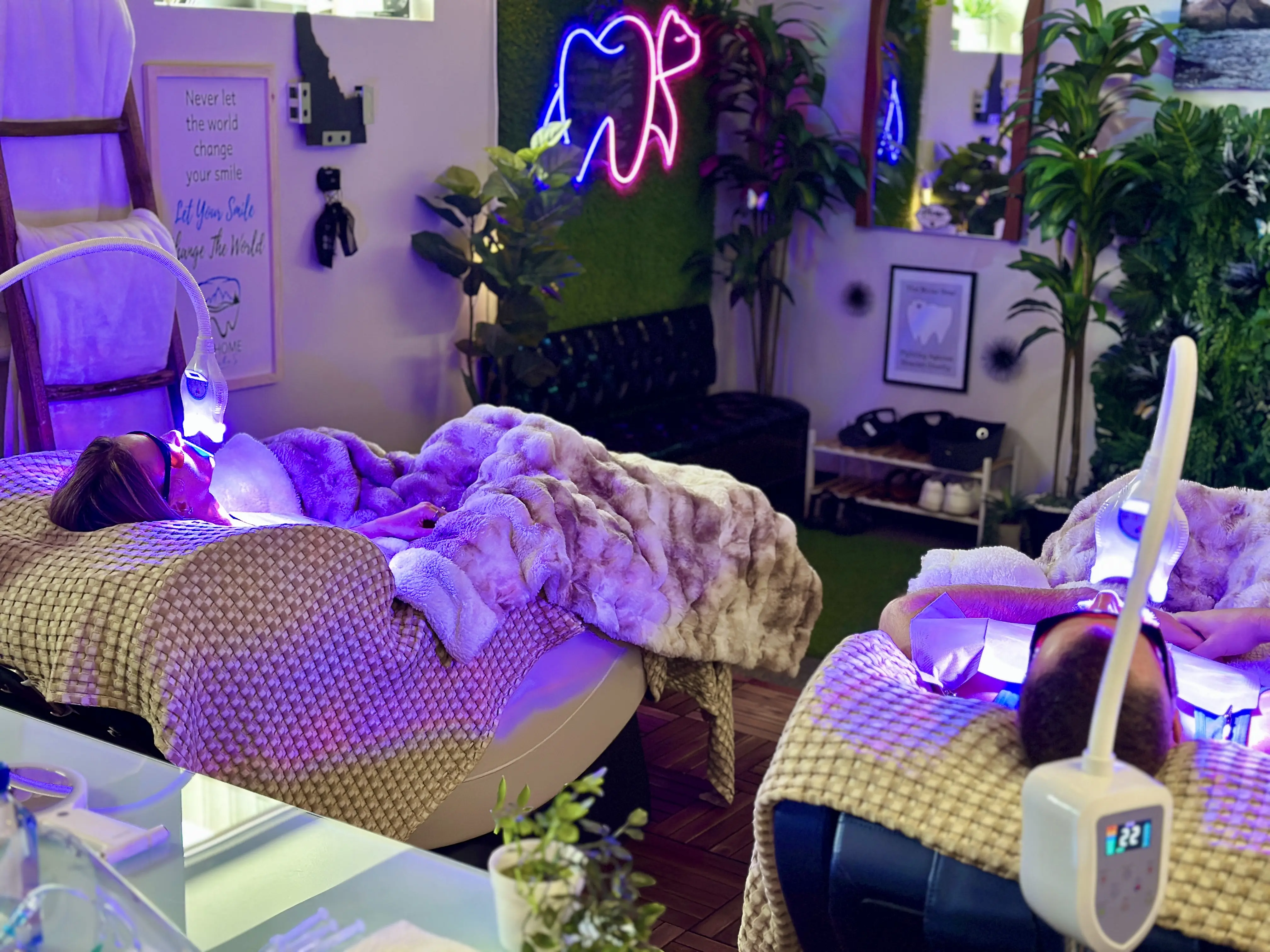
IDAHOME Smiles is a private cosmetic whitening studio in Historic Downtown Boise. Our experience is built around a brighter-looking smile and a relaxing atmosphere with zero-gravity massage chairs, ambient lighting, and calming music.
For children's dental concerns, consult a pediatric dentist. For adults exploring cosmetic whitening, discover our studio and available services.
IDAHOME Smiles does not diagnose or treat dental conditions. Whitening results vary.
Evidence-based guidance.
- American Academy of Pediatric Dentistry. Policy on the Use of Dental Bleaching for Child and Adolescent Patients . Latest revision 2023.
- American Academy of Pediatric Dentistry. Adolescent Oral Health Care . Guidance on adolescent development and dental care.
- American Dental Association. Whitening — Oral Health Topics . Bleaching methods, side effects, and clinical considerations.
This article is for general education only and does not replace evaluation by a licensed pediatric dentist. IDAHOME Smiles offers cosmetic whitening services, not pediatric dental diagnosis or treatment.
IDAHOME Smiles · Historic Downtown Boise, Idaho