Sensitive Teeth? Let's Understand Why.
That sudden zing from an icy drink or a bite of something sweet can be surprisingly uncomfortable. Tooth sensitivity has several possible explanations, and the right response depends on what's causing it. Discover common triggers, practical comfort strategies, and what to know about sensitivity and cosmetic whitening.
What actually causes sensitive teeth?
Tooth sensitivity is a symptom, not a single diagnosis. Different underlying conditions can produce similar sensations, which is why an examination may be necessary.
Gum recession or tooth wear
Dentin contains microscopic tubules connected with the tooth's internal nerve tissues. When dentin becomes exposed, temperature changes and other stimuli may cause discomfort.
Cavities, cracks, or restorations
Tooth decay, damaged teeth, worn fillings, and other conditions may cause sensitivity or pain. A dentist can determine whether treatment is necessary.
Brushing pressure and acidic exposure
Aggressive brushing may contribute to gum recession or tooth wear. Frequent exposure to acidic drinks and foods can contribute to enamel erosion over time.
Temporary post-whitening sensitivity
Some people experience temporary tooth sensitivity during or after peroxide-based whitening. Response varies with the individual, product, and treatment conditions.
Important: A sensitive tooth does not necessarily mean your enamel is damaged. Likewise, pain should not automatically be blamed on whitening or dismissed as normal sensitivity.
What triggers your tooth sensitivity?
Choose a situation below to learn what it might indicate and which next steps may be appropriate. More than one cause is possible.
Cold water or ice cream causes a quick zing
Temperature sensitivity can occur with exposed dentin, gum recession, enamel wear, or dental problems such as cavities. Avoid forcing yourself to tolerate painful temperatures. If symptoms are new, persistent, or concentrated in one tooth, arrange a dental evaluation.
Sweet or acidic foods trigger discomfort
Sweet or acidic substances may trigger sensitive areas of a tooth. Cavities and exposed dentin are among the possible explanations. Reduce repeated acidic exposures and ask a dentist to investigate ongoing discomfort rather than assuming the cause.
My teeth became sensitive after whitening
Temporary sensitivity is a known possible effect of peroxide whitening. Avoid further whitening while symptoms are present and follow the aftercare guidance you received. Seek dental advice if sensitivity is severe, persists, or worsens. Do not assume all tooth pain after whitening is harmless.
One tooth hurts when I bite down
Pain on biting can have causes that require dental assessment, including cracks or problems involving the tooth or surrounding tissues. Arrange a dental appointment rather than attempting to treat the pain with cosmetic products or whitening.
My tooth pain lingers or happens on its own
Lingering pain, spontaneous pain, or symptoms that keep getting worse deserve prompt dental assessment. If you also have significant swelling, fever, or signs of infection, seek urgent dental care. Difficulty breathing or swallowing requires emergency medical attention.
This educational explorer cannot diagnose sensitivity or determine whether whitening is appropriate for an individual.
Everyday habits for sensitive teeth.
The best strategy depends on the cause of discomfort. These general habits can support ordinary dental care while you seek appropriate professional guidance.
Brush with gentle pressure rather than aggressive scrubbing. Ask your dental professional about appropriate technique.
Repeated sipping of acidic drinks can contribute to tooth erosion. Water is a practical everyday choice.
Some desensitizing toothpastes can help certain types of sensitivity with continued use. A dentist can help determine whether one is appropriate.
Don't ignore the cause. Comfort measures cannot substitute for diagnosing a cavity, fractured tooth, gum disease, or another condition requiring dental care.
Can teeth whitening cause sensitivity?
Yes. Temporary tooth sensitivity and gum irritation are recognized potential effects of peroxide-based teeth whitening. Not everyone experiences them, and the intensity can vary.
Whitening changes tooth appearance. It is not a treatment for sensitive teeth, enamel erosion, cavities, or gum conditions. Existing unexplained pain should be evaluated by a dentist before proceeding with cosmetic whitening.
Discuss existing concerns
Tell us about current sensitivity, recent dental procedures, or discomfort before your appointment. We can explain our cosmetic service and recommend dental evaluation when concerns fall outside our scope.
Pay attention to your response
Follow the guidance provided at your appointment. If you experience discomfort, avoid further whitening while it continues. Persistent or severe symptoms warrant professional dental assessment.
Our commitment: IDAHOME Smiles provides a comfort-focused cosmetic whitening experience. We do not promise that whitening is sensitivity-free or that our formulations repair, rebuild, or strengthen enamel.
Sensitivity care vs. cosmetic whitening.
| Approach | Purpose | Important distinction |
|---|---|---|
| Dental examination | Evaluate pain and possible dental conditions | Identifies causes and guides treatment |
| Desensitizing toothpaste | Help manage certain types of sensitivity | Not a substitute for evaluating unexplained pain |
| Gentle brushing | Support everyday oral hygiene | Does not repair a cavity or fracture |
| Cosmetic whitening | Change the appearance of natural tooth color | May temporarily cause sensitivity; does not treat its underlying causes |
When should you see a dentist?
A dental evaluation is important when sensitivity persists, worsens, appears without an obvious trigger, or affects a particular tooth.
Book a dental evaluation
Seek care for ongoing sensitivity, pain when biting, lingering discomfort after hot or cold exposure, or unexplained toothache.
Recognize urgent symptoms
Severe pain, facial or gum swelling, fever, or suspected infection may require urgent assessment. Trouble breathing or swallowing is a medical emergency.
Frequently asked questions.
What causes sensitive teeth?
Potential causes include exposed dentin, gum recession, enamel wear, tooth decay, cracks, and certain dental procedures. A dentist can help determine the underlying cause.
Why do my teeth hurt when I drink cold water?
Cold sensitivity can develop when dentin becomes exposed or when a tooth has decay, a crack, or another problem. New, persistent, or localized pain should be evaluated.
Can whitening make my teeth sensitive?
Yes. Temporary sensitivity is a recognized potential side effect of peroxide-based whitening. Severity and duration vary, and ongoing pain warrants dental assessment.
Can I whiten my teeth if they are already sensitive?
The answer depends on the cause of your sensitivity. Have unexplained or ongoing symptoms evaluated by a dentist before cosmetic whitening. Whitening is not a treatment for tooth sensitivity.
Does sensitivity mean my enamel is damaged?
Not necessarily. Tooth sensitivity can have multiple causes, including exposed root surfaces or dental conditions unrelated to simple enamel thinning.
Will nano-hydroxyapatite cure sensitivity?
Hydroxyapatite-containing dental products are studied for several oral-care uses, including dentin sensitivity. Evidence depends on the specific formulation and study conditions. Do not assume that a cosmetic whitening product can treat sensitivity.
How can I make my teeth less sensitive?
Use gentle brushing techniques, avoid overly aggressive cleaning, and discuss desensitizing toothpaste or other appropriate options with your dentist. Persistent symptoms require evaluation of their cause.
More ways to understand your smile.
Nano-hydroxyapatite explained
Explore the difference between mineral-based oral-care research and cosmetic whitening.
Read the science guide →Whitening aftercare
Learn about realistic results, everyday maintenance habits, and post-whitening considerations.
Explore smile maintenance →A brighter-looking smile. A more relaxing experience.
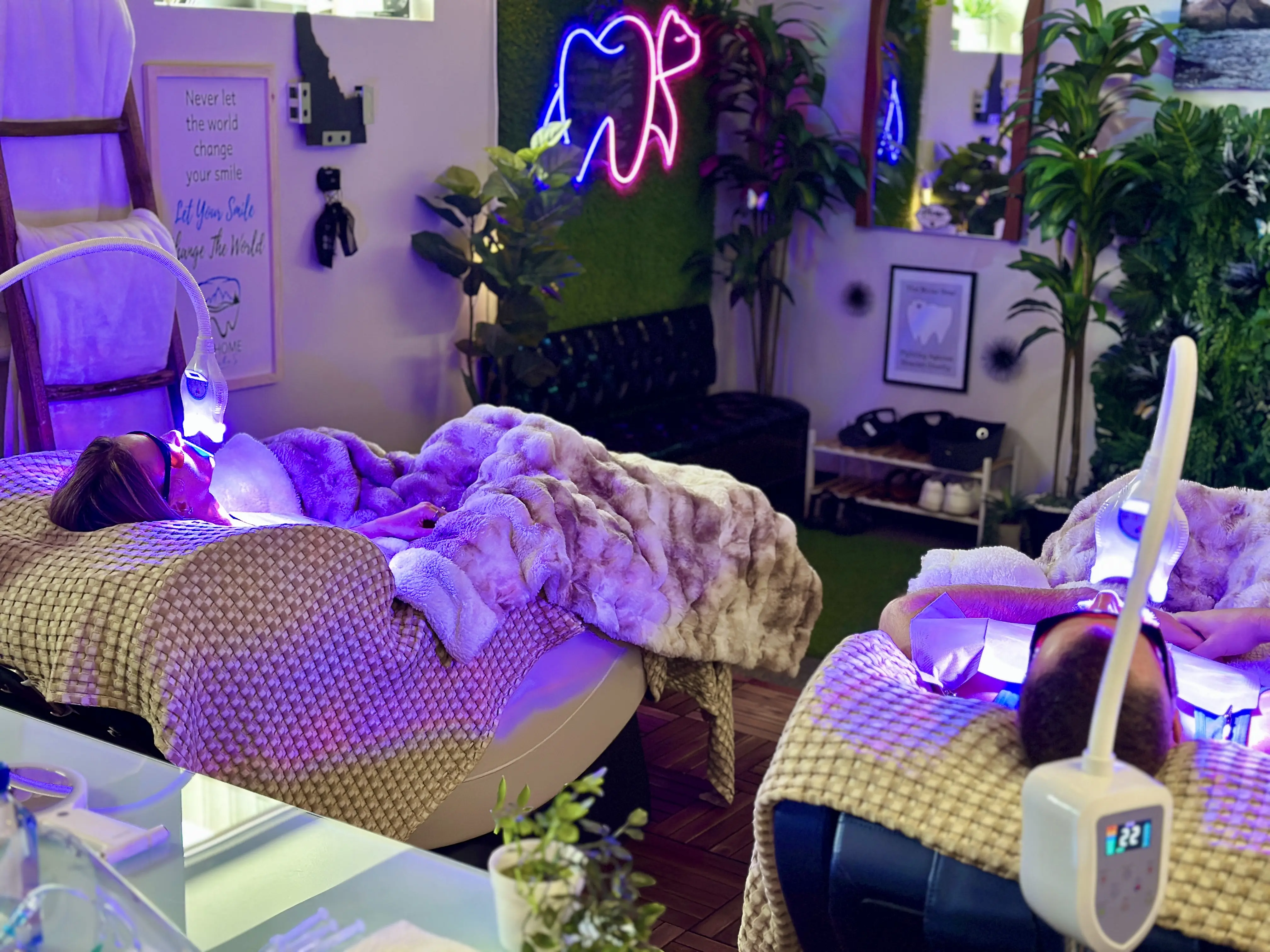
At our private Historic Downtown Boise studio, cosmetic whitening is paired with an atmosphere designed to help you unwind. Enjoy a zero-gravity massage chair, serene music, and calming ambient lighting. Have a question about whitening and sensitivity? We're happy to explain our services and their limitations.
If you have active or unexplained tooth pain, consult a dentist before booking cosmetic whitening. Individual whitening results vary.
Sources
- American Dental Association. Whitening — Oral Health Topics . Whitening effects, tooth sensitivity, and patient considerations.
- American Dental Association, MouthHealthy. Sensitive Teeth . Common causes and dental-care advice.
- National Institute of Dental and Craniofacial Research. Tooth Decay . General background on cavities and tooth discomfort.
- IDAHOME Smiles. Before & After Teeth Whitening Care . Our studio's current cosmetic whitening guidance.
This article provides general educational information and is not a diagnosis, treatment recommendation, or substitute for professional dental care. IDAHOME Smiles provides cosmetic whitening services and does not diagnose or treat dental conditions.
IDAHOME Smiles · Historic Downtown Boise, Idaho
Fighting Against Enamel Cruelty