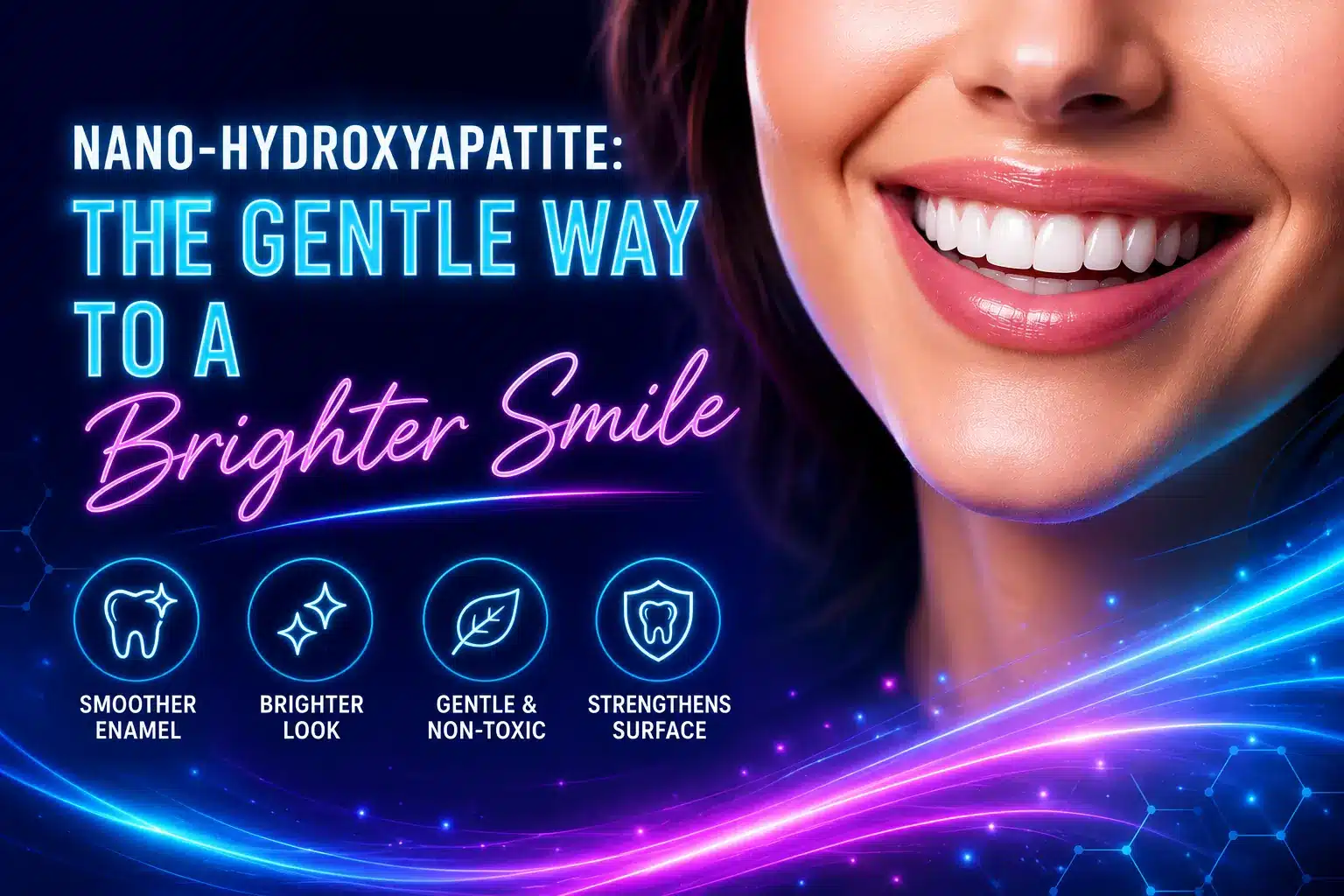
Nano-Hydroxyapatite: A Brighter Smile or a Whitening Breakthrough?
Nano-hydroxyapatite has become a popular ingredient in modern toothpaste. But does it actually whiten teeth, and how does it compare with peroxide? Let's separate promising research from marketing claims so you can make informed choices.
What is nano-hydroxyapatite?
Hydroxyapatite is a calcium-phosphate mineral that makes up much of natural tooth enamel. Nano-hydroxyapatite refers to very small manufactured particles of that mineral.
Researchers study hydroxyapatite for several dental applications. It is also found in consumer oral-care products, including some toothpastes marketed for appearance and everyday enamel care.
Inspired by tooth enamel
Hydroxyapatite resembles the mineral component of natural enamel. That similarity explains much of the scientific interest in the ingredient.
Not a replacement for lost enamel
Findings about early mineral changes should not be confused with regrowing missing enamel, repairing cavities, or restoring damaged teeth. Those concerns belong with a licensed dental professional.
Worth knowing: Evidence concerning an ingredient does not guarantee identical results from every toothpaste or whitening formulation.
Does nano-hydroxyapatite whiten teeth?
The answer depends on what you mean by "whiten." Toothpaste can make teeth appear cleaner or brighter through cleaning and surface-stain removal. That is different from bleaching the natural tooth shade with peroxide.
Hydroxyapatite toothpaste
Studies have explored changes in tooth appearance with hydroxyapatite-containing products. Some report encouraging results, but the effects can depend on the complete formulation, cleaning ingredients, study conditions, and how brightness is measured.
Peroxide whitening
Hydrogen peroxide and carbamide peroxide are used in whitening products to break down certain discoloring compounds. They can change the shade of natural teeth, although individual outcomes and comfort vary.
A toothpaste that helps teeth look cleaner is not necessarily capable of producing the same shade change as a bleaching treatment. [1, 2]
nHA vs. peroxide: different purposes.
Understanding the distinction helps set realistic expectations for cosmetic results.
| Question | Nano-hydroxyapatite | Peroxide whitening |
|---|---|---|
| Main context | Oral-care ingredient studied for enamel-related outcomes and appearance | Cosmetic tooth bleaching |
| How it relates to brightness | May contribute to appearance in specific tested formulations | Oxidizes certain discoloring compounds |
| Predictable multi-shade change? | Not established from nHA alone | Possible, with variable individual results |
| Used in | Selected toothpastes and oral-care formulations | Whitening gels, strips, and other bleaching products |
| Can replace dental treatment? | No | No |
General ingredient comparison; not a clinical comparison of products or services at IDAHOME Smiles.
What are you really looking for?
Choose the question closest to your goal. Tap a panel to reveal the distinction that matters.
I want my natural teeth to look noticeably lighter.
You're describing cosmetic shade change. Peroxide-based whitening is one established approach for natural teeth, but results vary. Crowns, veneers, and fillings do not respond like natural tooth structure. Ask your dental professional whether whitening is appropriate for you.
I want to keep my smile looking fresh between visits.
Consistent brushing, flossing, routine dental visits, and sensible stain-management habits can support your smile's appearance. A toothpaste's complete formulation matters more than a single trendy ingredient. Read our whitening maintenance guide .
I'm worried about enamel loss, cavities, or sensitivity.
That's an oral-health question rather than a cosmetic whitening goal. A licensed dentist or hygienist can evaluate your situation and recommend appropriate care. Fluoride toothpaste remains an established option for cavity prevention; research on hydroxyapatite products is continuing. [3, 4]
This interactive guide is educational only and does not provide a diagnosis or personal treatment recommendation.
What does the science actually say?
A published review examined hydroxyapatite toothpastes and tooth-color outcomes. The authors also identified a need for additional high-quality clinical trials. [2]
Studies have investigated hydroxyapatite and early enamel mineral changes. Reviews have reported different conclusions and limitations across study designs. [4, 5]
Fluoride-containing toothpaste has longstanding evidence for cavity prevention. Speak with your dental professional before changing a recommended oral-care routine. [3]
How does nHA fit into an everyday routine?
Start with your oral-health needs
Your cavity history, sensitivity, existing dental work, and other concerns may influence your dentist's toothpaste recommendation. An ingredient trend should not take priority over individualized dental care.
Look at the complete product
Different formulations can contain different concentrations, abrasives, and additional ingredients. A product labeled "hydroxyapatite" is not automatically equivalent to every other formulation studied in clinical research.
Want a deeper look at the difference between these oral-care ingredients? Read our companion article: Nano-Hydroxyapatite vs. Fluoride: What nHA Actually Does .
Frequently asked questions
Is nano-hydroxyapatite a bleaching ingredient?
No. Nano-hydroxyapatite is a calcium-phosphate mineral ingredient. It is not hydrogen peroxide or carbamide peroxide, the bleaching agents commonly used to change natural tooth shade.
Does nano-hydroxyapatite remove coffee stains?
Some toothpastes remove surface stains through their overall cleaning formulation. You cannot assume nano-hydroxyapatite alone will remove coffee stains or produce a specific shade change.
Can nano-hydroxyapatite regrow lost enamel?
Research into early mineral changes should not be interpreted as evidence that a toothpaste can regrow enamel that has been physically lost or repair an established cavity. Seek a dental evaluation for suspected damage.
Is nano-hydroxyapatite better than fluoride?
A universal superiority claim is not established. Fluoride toothpaste has well-established cavity-prevention evidence, while hydroxyapatite findings depend on the formulation and research outcomes. Your dental professional can help you choose.
Can hydroxyapatite toothpaste maintain whitening results?
Keeping teeth clean and managing new surface stains can help maintain a bright appearance. However, a hydroxyapatite ingredient does not guarantee longer-lasting whitening results. Diet, habits, and individual factors also matter.
Does IDAHOME Smiles provide enamel repair treatment?
No. IDAHOME Smiles specializes in cosmetic teeth whitening within a relaxing private studio. We do not diagnose dental conditions or offer enamel repair, cavity treatment, or other restorative dental procedures.
A little time for yourself. A brighter-looking smile.
Our private Downtown Boise whitening studio brings together cosmetic smile care and a restorative-feeling spa environment. Relax in a zero-gravity massage chair, enjoy the atmosphere, and discover a whitening experience designed around comfort.
Cosmetic whitening only. Individual results vary.
Sources
- American Dental Association. Whitening — Oral Health Topics .
- Tooth Whitening with Hydroxyapatite: A Systematic Review . Published in Dentistry, 2023.
- American Dental Association. Toothpastes — Oral Health Topics .
- Efficacy of nano-hydroxyapatite on caries prevention — a systematic review and meta-analysis . 2022.
- Clinical evidence of caries prevention by hydroxyapatite: An updated systematic review and meta-analysis . 2024.
Educational content about published ingredient research is not a representation of the clinical efficacy of IDAHOME Smiles products or services. For dental diagnosis, treatment, or individualized oral-health recommendations, consult a licensed dental professional.
IDAHOME Smiles · Downtown Boise, Idaho
Fighting Against Enamel Cruelty