Black Paste. White Promises.
Activated charcoal looks dramatic in a toothpaste advertisement. But does black powder actually make teeth whiter—and what happens when it repeatedly meets enamel? We're examining the claims, the evidence, and the alternatives worth understanding.
What is activated charcoal—and why put it in toothpaste?
Activated charcoal is a carbon-based material processed to create a large internal surface area. It's valued for its ability to bind certain substances in specific applications. That property has inspired claims that charcoal can draw stains, impurities, and toxins from teeth.
But properties demonstrated in one setting don't automatically establish that a charcoal toothpaste provides a meaningful or safe tooth-whitening benefit.
Charcoal absorbs stains.
Charcoal products are often promoted as magnets for pigments and impurities. These descriptions can make the ingredient seem capable of deep tooth whitening.
Clinical benefits remain uncertain.
Research has not established consistent whitening benefits with adequate safety across charcoal oral-care products. Any visible improvement may involve external stain removal rather than bleaching the tooth shade.
Important distinction: Adsorption is not the same as peroxide bleaching. Removing some surface pigment does not mean a product can safely lighten the natural shade of a tooth.
Can charcoal toothpaste damage enamel?
Abrasivity is an important consideration. Toothpastes use cleaning agents to help remove plaque and stains, but abrasive ingredients and brushing technique need appropriate balance.
Some charcoal-containing formulations and DIY powder mixtures raise concerns about tooth-surface wear. However, abrasivity depends on the complete product formulation and testing, not simply whether charcoal appears in the ingredient list.
Once tooth enamel is lost, it does not regrow as new enamel tissue. A dentist can evaluate signs of wear or sensitivity and recommend suitable oral-care products.
Explore the ADA whitening research →Six claims. What's the verdict?
Select any statement to reveal what dental evidence currently supports. Some answers are more nuanced than a simple true-or-false label.
Claim 01: Charcoal toothpaste can whiten teeth by several shades.
Evidence has not demonstrated reliable multi-shade bleaching from charcoal toothpaste. Removing external stains can sometimes change appearance, but it is not the same as changing the underlying natural tooth color.
Claim 02: Natural ingredients are always gentler on enamel.
Natural origin doesn't guarantee safety. Abrasive powders, acidic ingredients, and harsh brushing can create unnecessary dental risks regardless of how an ingredient is marketed.
Claim 03: Every charcoal toothpaste damages enamel.
Not every charcoal toothpaste has been proven harmful. Risk depends on factors including formulation, abrasivity, and use. However, the evidence does not currently justify assuming charcoal delivers a safe whitening advantage.
Claim 04: Charcoal can replace fluoride toothpaste.
Charcoal itself does not replace fluoride's established role in preventing tooth decay. The ADA recommends twice-daily brushing with fluoride toothpaste. A toothpaste containing charcoal should not be assumed to have adequate fluoride or demonstrated anticavity effectiveness.
Claim 05: Whitening toothpaste and peroxide bleaching work the same way.
Many whitening toothpastes primarily remove extrinsic surface stains using appropriately formulated cleaning agents. Peroxide bleaching acts chemically on discoloring compounds and may lighten natural tooth shade.
Claim 06: A dramatic before-and-after photo proves effectiveness.
Lighting, camera settings, surface moisture, image editing, and the starting condition of the teeth can influence photographs. Clinical research and product-specific testing offer stronger evidence than advertising images.
Interactive educational feature only. Product-specific safety and suitability require more than ingredient claims.
What works better than guessing with charcoal?
Start by distinguishing daily oral hygiene, surface-stain removal, and genuine cosmetic bleaching. They are related, but not identical.
Daily fluoride toothpaste
Brush twice a day with an appropriate fluoride toothpaste and a soft-bristled toothbrush. Clean between teeth every day.
Evaluated stain-removing toothpaste
Whitening toothpastes with the ADA Seal can be an option for managing certain external stains when used as directed.
Appropriate cosmetic whitening
Well-formulated peroxide whitening products can lighten natural teeth. Results and potential sensitivity vary, and existing dental concerns should be evaluated.
Already noticing tooth wear or sensitivity? Consult a dentist before trying stronger stain removal or bleaching. Cosmetic whitening does not diagnose or treat underlying dental conditions.
Not every whitening method does the same job.
| Method | Primary action | Evidence consideration |
|---|---|---|
| Charcoal toothpaste | Formulation-dependent cleaning or polishing | Insufficient evidence for reliable whitening with adequate safety |
| Evaluated whitening toothpaste | Primarily targets surface stains | Some products have demonstrated safety and efficacy |
| Professional dental cleaning | Removes deposits and certain external stains | Does not chemically bleach natural tooth shade |
| Peroxide whitening strips | Chemical bleaching of natural teeth | Evidence-supported products exist; irritation and sensitivity are possible |
| In-studio cosmetic whitening | Cosmetic whitening using a defined formulation and process | Individual shade change and comfort vary |
Does eco-friendly mean tooth-friendly?
Sustainability matters, but environmental marketing and dental safety are separate questions. A bamboo toothbrush, a recyclable package, or a naturally derived ingredient does not automatically establish that a whitening product is effective or suitable.
Look beyond the label.
Consider packaging, material sourcing, product durability, and substantiated environmental claims instead of assuming that "natural" means sustainable.
Look for evidence.
Evaluate fluoride content, product testing, intended use, and advice from dental professionals. A sustainable choice should also serve its intended purpose.
Charcoal toothpaste: Frequently asked questions.
Is charcoal toothpaste safe for everyday use?
Safety depends on the complete product formulation, abrasivity, fluoride content, and brushing habits. The evidence does not establish a reliable whitening benefit with adequate safety across charcoal products.
Does activated charcoal actually whiten teeth?
Reliable clinical evidence for meaningful tooth bleaching from activated charcoal is insufficient. Any visible change may involve external stain removal rather than true shade change.
Can charcoal permanently damage enamel?
Abrasive methods can contribute to tooth wear. However, not every charcoal product has the same abrasivity. Product-specific characteristics and how it is used matter.
Is charcoal toothpaste better than regular toothpaste?
There is insufficient evidence that charcoal provides a superior whitening benefit. Fluoride toothpaste remains an evidence-supported choice for everyday cavity prevention.
What if my charcoal toothpaste contains fluoride?
Fluoride content is relevant to cavity protection, but it does not establish the charcoal ingredient's whitening benefit. Evaluate the complete product and independent evidence.
Can charcoal remove coffee stains?
Some external stains may be affected by cleaning or abrasive action, but charcoal products have not demonstrated consistent advantages over appropriately formulated stain-removing toothpastes.
Are natural whitening products safer?
Not necessarily. Product safety depends on the formulation, concentration, exposure, and evidence—not whether an ingredient is described as natural.
What should I use instead of charcoal?
For daily care, use an appropriate fluoride toothpaste. For external stains, consider an evaluated whitening toothpaste. For cosmetic bleaching, ask about suitable evidence-supported whitening methods.
More from the IDAHOME Smiles journal.
Remove Surface Stains at Home
Compare whitening toothpaste, baking-soda formulations, charcoal, oil pulling, and other popular at-home methods.
Explore stain-removal methods →What Causes Stained Teeth?
Understand why teeth change color and how external stains differ from deeper discoloration.
Explore tooth discoloration →A brighter-looking smile. Without the internet guesswork.
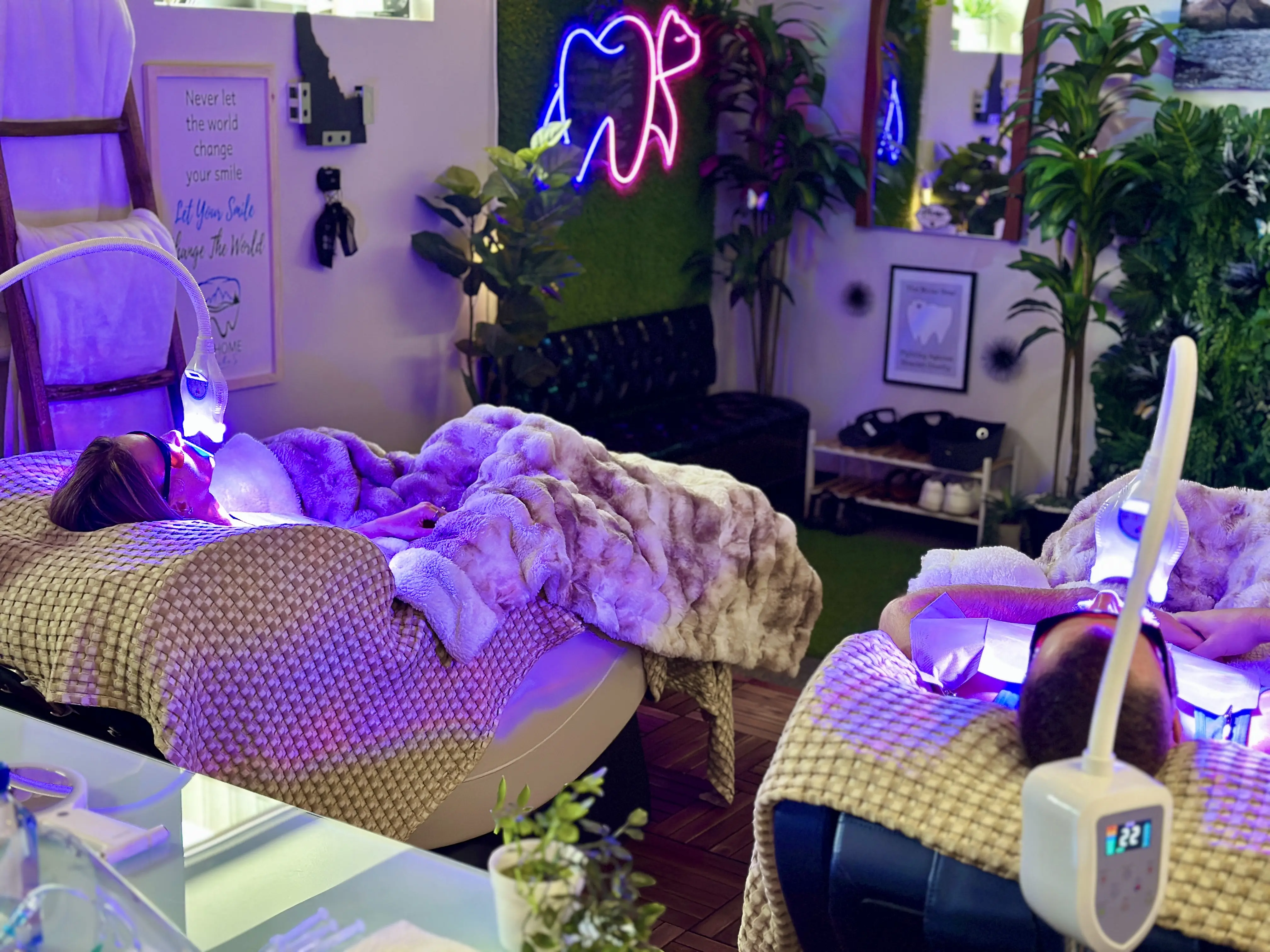
Explore cosmetic whitening in our private, spa-inspired studio. Sink into a zero-gravity massage chair with calming music and ambient lighting while taking a little time for yourself.
Cosmetic whitening only. Individual results vary. IDAHOME Smiles does not diagnose or treat dental conditions.
What informs our conclusions?
- American Dental Association. Whitening — Oral Health Topics . Discussion of DIY methods, charcoal products, tooth bleaching, and evidence limitations.
- American Dental Association (2025). Debunking Dental Trends . Clinical concerns about charcoal toothpaste and abrasive whitening trends.
- Lemke K. (2022). Charcoal Toothpastes Pose Risks with Few Benefits . Evidence review discussing benefits and possible risks.
- American Dental Association. Toothpastes — Oral Health Topics . Fluoride, stain-removing ingredients, and toothpaste evaluation.
- IDAHOME Smiles. Before & After Care . Current studio guidance for cosmetic whitening guests.
This guide provides general educational information and is not a diagnosis or personalized dental advice. Consult a licensed dental professional for tooth wear, pain, sensitivity, and oral-health concerns.
IDAHOME Smiles · Historic Downtown Boise, Idaho
Fighting Against Enamel Cruelty