Your Smile Has Dental Work. Can It Still Be Whitened?
Crowns, veneers, bridges, and fillings can blend beautifully with natural teeth. But what happens when you want a brighter-looking smile? The answer depends on which teeth are natural and which surfaces are restorations.
Natural teeth respond differently from dental restorations.
Whitening agents such as hydrogen peroxide and carbamide peroxide interact with discoloring compounds in natural teeth. Restorations are made from materials with different properties and do not bleach predictably in the same way.
Cosmetic shade changes are possible.
Bleaching can lighten certain types of discoloration in natural teeth. Starting shade, tooth characteristics, and treatment conditions influence the outcome.
The existing shade generally remains.
Crowns, veneers, and composite restorations are manufactured or selected to match a chosen shade. Ordinary tooth bleaching does not reliably make those materials a lighter color.
The critical distinction: A restoration may accumulate external stains that a dental professional can sometimes address. Removing deposits is not the same as bleaching the restoration to a new shade.
Which kind of dental work do you have?
Tap a restoration type to learn what whitening can realistically change and which questions to discuss with your dentist.
Dental crowns or caps
Crowns made from porcelain, zirconia, or other restorative materials generally will not lighten with bleaching gels. If surrounding natural teeth become lighter, a visible crown may no longer match. A dentist can evaluate whether polishing or shade-related restorative work is appropriate.
Porcelain or composite veneers
Veneers do not respond to bleaching like natural tooth enamel. External staining, surface appearance, and discoloration around veneer margins require assessment by a dentist. Whitening the surrounding natural teeth can create a shade difference.
Tooth-colored composite fillings or bonding
Tooth-colored fillings and bonding may remain the same shade after natural teeth are whitened. This is especially noticeable when bonding is on a front tooth. Ask a dentist about potential shade matching or replacement if the difference is visible.
Dental bridges
A bridge includes artificial tooth surfaces supported by natural teeth or implants. Bleaching cannot be expected to lighten the bridge material. A dentist can explain options for discoloration or mismatch.
Dental implants and implant crowns
The implant itself is an artificial tooth-root replacement, with a visible restoration attached above it. The crown generally retains its selected shade. Whitening adjacent natural teeth can make a color difference more noticeable.
Mostly natural teeth, with some dental work
Your natural teeth may respond to cosmetic bleaching while crowns, veneers, or fillings stay their existing shade. The location and visibility of dental work matter. Discuss any front-tooth restorations and your cosmetic goals with a dentist first.
This guide is educational and does not assess individual dental restorations or establish whitening suitability.
Why whitening can make a crown stand out.
Imagine a crown that was carefully color-matched to the natural tooth beside it. If the natural tooth becomes lighter after bleaching, the crown usually stays its original shade.
The American Dental Association specifically identifies this potential mismatch as an important consideration before cosmetic whitening. A dentist can evaluate existing restorations and whether additional cosmetic dental work should be considered.
Read the ADA whitening overview →Thinking about whitening before new dental work?
If you are planning a visible crown, veneer, or composite restoration, talk to your dentist about your preferred tooth shade before the restoration is finalized.
Discuss your goal
Explain whether you want to lighten your natural teeth and which restorations are already present or planned.
Plan the sequence
Your dentist can determine whether whitening should take place before new restorations are matched and how long to allow before final shade selection.
Assess the final match
A dental professional can evaluate natural-tooth shade and the appearance of nearby restorations, then discuss any appropriate adjustments.
Already have dental work? That doesn't necessarily mean all cosmetic whitening is unsuitable. It does mean expectations should be discussed in advance, especially when restorations are visible when you smile.
What responds to whitening?
| Material | Bleaches lighter? | What to consider |
|---|---|---|
| Natural teeth | Often, depending on discoloration | Results and sensitivity vary |
| Porcelain or zirconia crowns | No predictable shade change | Potential mismatch; consult dentist |
| Porcelain veneers | No | Original shade generally remains |
| Composite bonding or fillings | No predictable shade change | Visible bonding may need shade assessment |
| Bridges | No predictable shade change | Restoration material and condition matter |
| Implant crowns | No | Nearby natural teeth may lighten |
This comparison refers to chemical whitening of underlying tooth or restoration shade, not professional removal of removable surface deposits.
Our role is cosmetic whitening, not restoration treatment.
A relaxing cosmetic whitening experience
IDAHOME Smiles provides a private, spa-inspired experience focused on the appearance of natural teeth. We explain realistic expectations and relevant limitations.
Restoration evaluation and shade matching
We do not diagnose dental conditions, polish or repair restorations, replace crowns, or provide restorative dental procedures. Those concerns belong with a licensed dentist.
Before you book: If you have visible crowns, veneers, bonding, or other dental work, consider asking your dentist about likely shade differences before undergoing whitening.
Can you whiten dental work? FAQs.
Can you whiten a dental crown?
Bleaching generally does not change the underlying color of a crown. A dentist can evaluate surface discoloration and cosmetic shade concerns.
Does teeth whitening work on veneers?
Whitening natural teeth does not predictably lighten porcelain or composite veneers. Visible shade mismatches may occur.
Can composite fillings be whitened?
Composite fillings do not respond to bleaching the same way natural teeth do. A dentist can assess whether a visible filling needs shade matching.
Can surface stains be removed from crowns?
Some removable deposits and external stains may respond to appropriate professional cleaning or polishing, depending on the restoration. That does not change the underlying shade.
Can I whiten natural teeth if I have a crown?
Possibly, but the crown is unlikely to lighten with surrounding teeth. Consult a dentist about oral health and whether a visible mismatch is likely.
Should I whiten before getting veneers?
Discuss the sequence with your dentist. If whitening is appropriate, the dentist can plan shade selection and timing for the new restorations.
Will whitening damage crowns or bonding?
Safety depends on the formulation and dental circumstances. Some bleaching protocols may affect properties of restorative materials or bonding interfaces. A dentist should review existing restorations before whitening.
Can dental implants be whitened?
Implant crowns are artificial restorations that generally do not bleach lighter. Whitening nearby natural teeth may affect the visual match.
More from the IDAHOME Smiles journal.
The White Teeth Aesthetic Guide
Explore the differences between natural-looking whitening and a complete Hollywood smile.
Explore the aesthetic guide →How Long Does Whitening Last?
Understand what changes the appearance of natural teeth over time and why results vary.
Learn about whitening longevity →A brighter-looking smile. A more relaxing way to unwind.
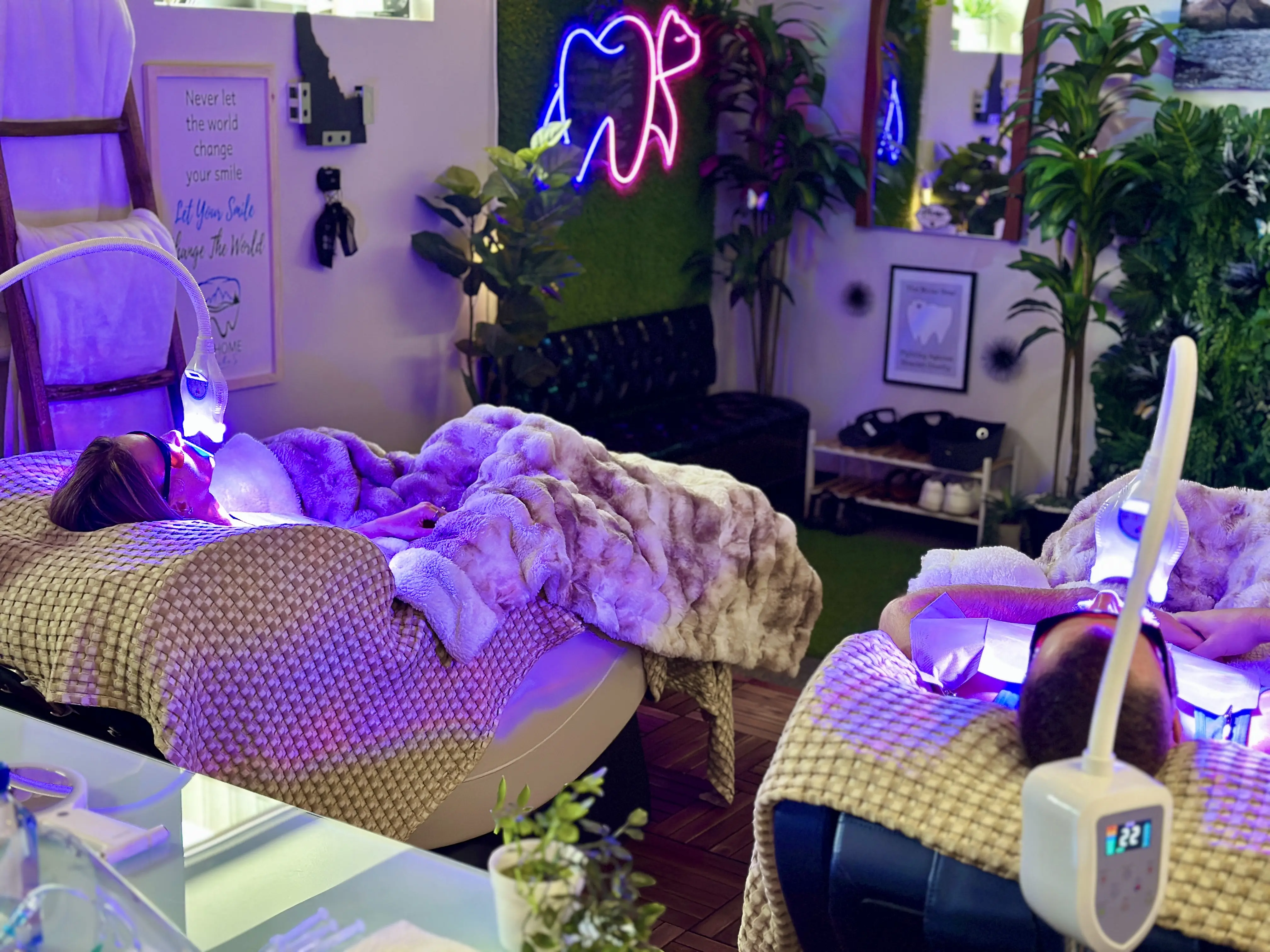
Explore cosmetic whitening in our private Downtown Boise studio, where zero-gravity massage chairs, serene music, and atmospheric lighting create an experience designed around comfort.
Cosmetic whitening only. Existing dental restorations generally do not lighten. Individual results vary.
Evidence behind the guide.
- American Dental Association. Whitening — Oral Health Topics . Natural tooth bleaching, restorative materials, shade mismatch, and treatment considerations.
- American Dental Association. Materials for Indirect Restorations . Dental restoration materials and their clinical applications.
- Journal of the American Dental Association. Getting Whiter Teeth . Consumer guidance on whitening and existing dental work.
- IDAHOME Smiles. Before & After Care . Current studio guidance.
Educational content only. This article does not replace dental examinations or individualized advice. IDAHOME Smiles provides cosmetic whitening, not dental restoration services.
IDAHOME Smiles · Historic Downtown Boise, Idaho
Fighting Against Enamel Cruelty