Love Your Coffee. Know Your Stains.
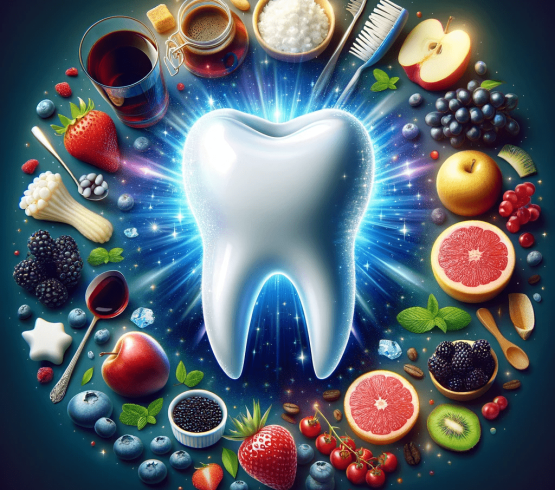
From your morning latte to a glass of red wine, everyday favorites can influence the appearance of your teeth. Explore 10 familiar foods and drinks associated with discoloration, why staining happens, and realistic ways to care for your brighter-looking smile.
Why do teeth become stained?
Tooth discoloration has several possible causes. Some stains develop on the outside of the tooth. Others originate within the tooth structure or relate to aging, medication, injury, or other factors.
Food and beverages are primarily discussed in connection with external, or extrinsic, staining. Dark pigments can contribute to visible discoloration over time. [1]
Surface stains
Pigments from food, drinks, and tobacco can accumulate on tooth surfaces. Some external stains may be addressed through appropriate cleaning or cosmetic whitening approaches.
Deeper discoloration
Natural tooth shade and internal discoloration have different causes. These cannot necessarily be managed by changing what you drink or by using stain-removing toothpaste.
Important distinction: A dark-colored food is not automatically harmful to teeth. Staining potential, acidity, sugar content, and overall oral health are separate considerations.
10 familiar foods and drinks worth knowing.
These are common examples, not a clinical ranking from most staining to least staining. Individual exposure and results vary.
Your morning ritual
Frequent coffee consumption is a well-recognized contributor to external tooth discoloration.
Not necessarily stain-free
Black and other dark teas contain compounds associated with visible surface staining over time.
Rich color in every sip
Red wine contains strong pigments and is among the commonly recognized beverages associated with tooth stains.
Dark color meets acidity
Dark cola can contribute pigments. Its acidity and sugar content are additional, separate dental considerations.
Colorful and nutritious
Blueberries, blackberries, and other deeply pigmented fruits can leave strong temporary color. There's no reason to avoid nutritious fruit solely because of its color.
Concentrated color
Grape, cranberry, and similar juices can contain intense pigments. Some are also acidic or contain significant amounts of sugar.
A colorful dinner favorite
Tomato-based sauces combine vivid color with acidity. Occasional consumption does not mean your teeth will become permanently stained.
Small amount, deep color
Dark sauces may temporarily leave pigment on the teeth. Direct evidence for predicting lasting stains from a particular sauce is more limited.
Bold in color and flavor
Balsamic vinegar contains dark pigments and is acidic. Its contribution to lasting tooth stains depends on exposure and other factors.
Brilliant golden pigments
These colorful foods can leave noticeable temporary pigment. The degree of long-term tooth staining from ordinary consumption is not predictable.
The bigger picture: Repeated exposure to staining substances often matters more than enjoying an occasional colorful meal.
Your favorites. A few smarter habits.
Choose what you enjoy most. Tap a category to reveal practical tips without unnecessary food rules.
☕ Coffee and tea
These drinks are common sources of external staining, especially with frequent exposure. Try having water afterward, maintain consistent oral hygiene, and consider limiting continuous sipping throughout the day. A straw can reduce some direct contact, but it doesn't prevent all staining.
🍷 Wine and dark beverages
Red wine, dark juices, and cola contain pigments that may affect tooth appearance. Alternating with plain water is a simple habit. Acidic beverages raise a separate oral-health consideration: avoid brushing immediately afterward and ask your dentist about appropriate care.
🫐 Berries and colorful fruit
Blueberries, blackberries, and grapes can leave temporary color, but they also belong in many nutritious diets. Enjoy your fruit, rinse with water if desired, and continue normal brushing and flossing. Whitening maintenance shouldn't require avoiding healthy foods.
🍝 Tomato sauce, curry, and dark condiments
Deeply colored sauces may leave pigment in the mouth. You can enjoy these foods while keeping ordinary oral-care habits. Water after a meal is an easy option. If the meal was acidic, give your teeth time before brushing.
✨ I want my smile refreshed for an event
If you're considering cosmetic whitening before a wedding, photographs, or another special occasion, plan ahead. For first-time IDAHOME Smiles guests, we generally suggest booking one to two weeks before the event. Results vary, and any dental concerns should be evaluated by a dentist.
Educational lifestyle tips only. These categories do not calculate an individual's staining risk or predict whitening results.
Keep the favorites. Simplify the habits.
Maintaining a bright-looking smile doesn't have to revolve around an endless list of forbidden foods.
Plain water can help wash away food and drink residue. It's an easy habit after colorful meals or beverages.
Continue gentle twice-daily brushing, daily cleaning between teeth, and regular dental appointments.
Whitening results and how long they remain noticeable vary. Consider your goals rather than following a rigid touch-up schedule.
A useful detail: The American Dental Association advises waiting after acidic foods or drinks before brushing, while rinsing with water is a practical immediate step. [3]
Stain removal and whitening are different.
Not every kind of tooth discoloration responds to the same approach.
| Approach | Main purpose | Important distinction |
|---|---|---|
| Everyday brushing | Routine oral hygiene | Helps manage buildup, but does not bleach natural tooth shade |
| Professional dental cleaning | Remove deposits and some external stains | Does not necessarily change underlying tooth color |
| Whitening toothpaste | Target surface discoloration | Effects depend on the whole formulation |
| Peroxide-based whitening | Cosmetic tooth shade change | Can lighten natural teeth; results vary |
| Dental evaluation | Assess unexplained discoloration or oral-health concerns | Appropriate when staining has an unclear cause |
General educational comparison, not a claim that a particular whitening treatment corrects every form of discoloration.
Do you need an all-white diet?
There isn't one universal food restriction that applies to every cosmetic whitening appointment. At IDAHOME Smiles, we provide guidance appropriate to your session rather than requiring every guest to follow the same blanket 48-hour white-food diet.
Coffee, tea, wine, and other pigmented foods may contribute to staining over time. That doesn't mean one colorful meal automatically reverses a whitening result.
Clear instructions
We explain the relevant care guidance before you leave, including any waiting period that applies.
Comfortable maintenance
The goal is a practical routine that fits your lifestyle, not unnecessary restrictions.
For more guidance, see our How to Maintain Your Teeth Whitening Results article and Before & After Care page.
Frequently asked questions.
What drinks stain teeth the most?
Coffee, dark tea, red wine, and cola are commonly associated with external tooth discoloration. There is no single universal ranking that predicts how much each beverage will stain an individual's teeth.
Does coffee permanently stain teeth?
Coffee can contribute to persistent external discoloration over time. Some stains may improve with appropriate dental cleaning or cosmetic whitening. Results depend on the stain and your individual circumstances.
Does tea stain teeth more than coffee?
Both can contribute to tooth stains. The effect depends on the type and strength of the drink, frequency of consumption, and individual oral conditions. A blanket claim that one always stains more is not appropriate.
Should I avoid blueberries and beets?
No. Colorful fruits and vegetables can be part of a nutritious diet. Their temporary pigment effects are not, by themselves, a reason to eliminate them.
Should I brush immediately after red wine or soda?
Because these beverages may be acidic, rinsing with water first is sensible. The ADA advises allowing time after acidic exposure before brushing. Continue your regular oral-care routine.
Can whitening remove every type of stain?
No. Whitening results vary by the cause and location of the discoloration and the type of teeth. Crowns, veneers, and fillings generally do not lighten like natural teeth. Your dentist can assess unexplained discoloration.
Can I drink coffee after whitening?
Follow the care guidance given at your appointment, including any waiting period that applies. There is no universal restriction that fits every whitening method. Coffee may contribute to new stains with repeated exposure.
A brighter smile. A moment to unwind.
When you're ready for a cosmetic smile refresh, visit our private whitening studio in Historic Downtown Boise. Relax in a zero-gravity massage chair with serene music and ambient lighting, and enjoy an experience designed to help you unwind.
Cosmetic whitening only. Individual results vary.
Sources
- American Dental Association. Whitening — Oral Health Topics . Extrinsic stains, bleaching, and cosmetic outcomes.
- American Dental Association, MouthHealthy. Teeth Whitening . Common staining habits and whitening considerations.
- American Dental Association, MouthHealthy. Dietary Acids and Your Teeth . Water rinsing and brushing timing after acidic exposure.
- IDAHOME Smiles. Before & After Teeth Whitening Care . Current studio guidance.
This article is for general educational purposes. The examples are not a clinical ranking or a prediction of individual staining risk. IDAHOME Smiles offers cosmetic whitening, not dental diagnosis or treatment. Consult a licensed dental professional for oral-health concerns.
IDAHOME Smiles · Historic Downtown Boise, Idaho
Fighting Against Enamel Cruelty